Table of Contents
When scalp micropigmentation looks artificial after several years, the cause is often poor planning, incorrect pigment depth, or failure to account for aging and fading. This article explains why some SMP results degrade over time and how proper technique helps results remain natural long-term.
Scalp micropigmentation (SMP) is often judged too early. Immediately after treatment, results can look sharp, dense, and dramatic. Photos taken at this stage are frequently used in marketing and on social media, reinforcing the idea that SMP is a permanent, set-and-forget solution.
Then, one or two years later, some people notice something has changed.
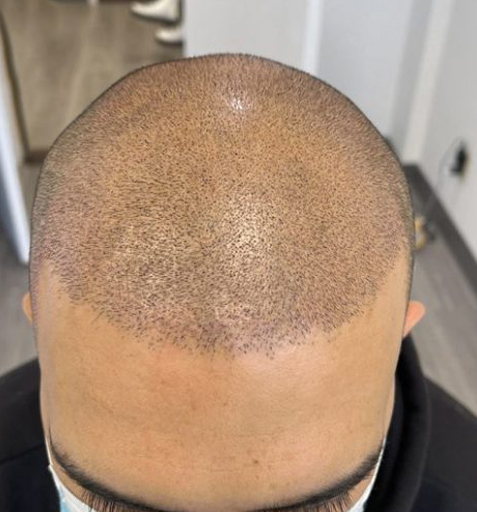
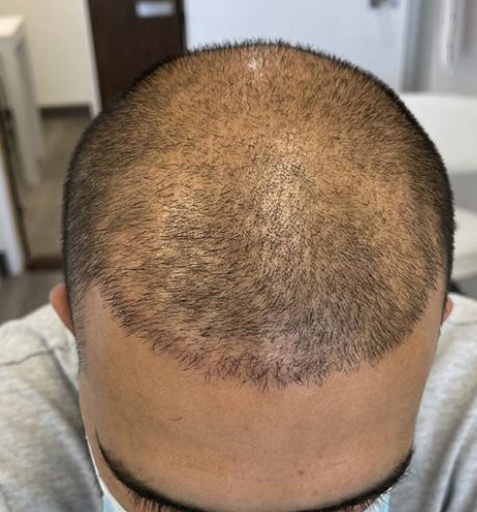
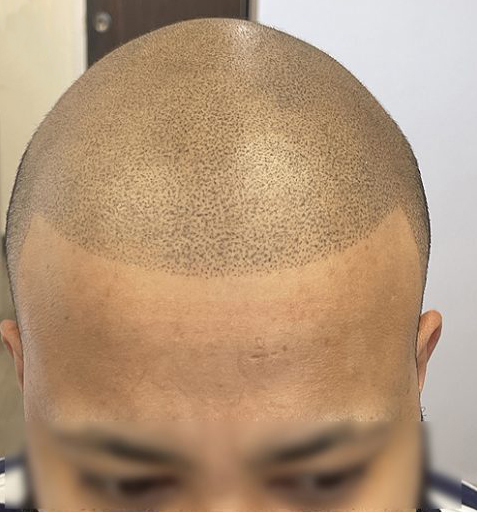
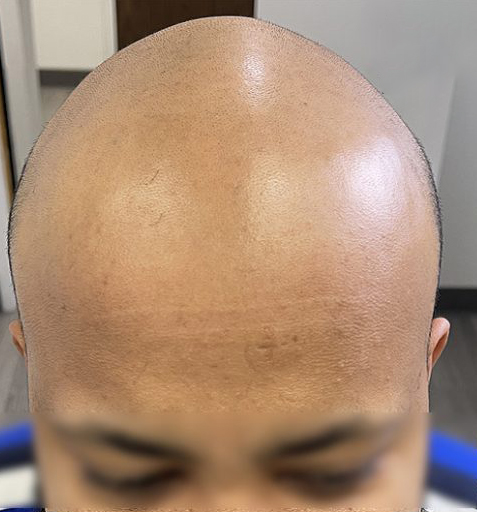
The SMP may look softer — or less defined. In some cases, it may look uneven, blurry, or clearly artificial. This is where the common question arises: why do some scalp micropigmentation look fake after a couple of years, even if it looked great at the start?
The answer is rarely a single cause. Instead, it is usually the result of design decisions, technique choices, skin behavior, and time interacting in predictable ways.
This article explains why SMP can lose realism over time — not to criticize the procedure, but to help set realistic expectations and prevent avoidable mistakes.
For a full overview of how scalp micropigmentation results behave overall, see:
scalp micropigmentation results → https://hairtattoo.ca/scalp-micropigmentation-results/
Scalp micropigmentation is not static. Pigment in skin is always subject to:
Natural skin turnover
UV exposure
Sebum (oil) production
Collagen changes with age
Subtle diffusion under the skin
A realistic SMP result is one that was designed with these changes in mind. When SMP looks fake after two years, it is usually because the original design assumed the result would stay exactly the same forever.
That assumption is where problems begin.
One of the most common reasons SMP looks unnatural after a couple of years is that it was overbuilt initially.
When pigment is applied too dark or too densely:
It may look bold and impressive immediately
It photographs well under studio lighting
It creates a strong contrast on day one
But over time:
Dense areas can fade unevenly
Dark pigment may soften into a flat tone
The scalp can lose the subtle variation that creates realism
SMP that is built conservatively tends to age better because it allows the skin and pigment to settle naturally. Overly dark SMP leaves little room for graceful aging.
Hairlines are one of the first places SMP realism breaks down.
A sharp, straight, or very low hairline can look striking at first — especially in before-and-after photos. However, as the face and skin age, that same hairline may begin to feel out of place.
Two years later, people often notice:
The hairline looks “stuck in time”
Facial aging contrasts with a youthful hairline
The edge appears too crisp compared to the rest of the scalp
Natural hairlines are imperfect and dynamic. SMP hairlines that are designed without allowance for aging often become the most obvious giveaway later.
Even when SMP is placed correctly, pigment impressions naturally soften over time. This is normal and expected.
Problems arise when:
The original dot size was too large
The depth was slightly too deep
Impressions were packed too tightly
As the skin renews itself and collagen structure changes, those dots can:
Appear less distinct
Merge visually under certain lighting
Lose the crisp follicle illusion
This doesn’t mean SMP has “failed,” but it does mean that work designed to be extremely bold early on may not maintain definition as well as more restrained work.
Skin biology plays a major role in how SMP ages.
Two people can receive visually similar SMP at the start and experience very different outcomes after two years.
Examples:
Oily scalps may experience faster fading and less defined impressions
Thinner or mature skin may allow pigment to diffuse slightly more
Sun-exposed scalps may show quicker lightening or tonal change
When SMP looks fake later, it is often because the original approach did not adjust enough for how that specific scalp behaves over time.
The scalp does not age uniformly.
Different zones — hairline, mid-scalp, crown — may:
Receive different amounts of sun
Produce different levels of oil
Heal differently after treatment
Over time, this can lead to:
Slightly uneven density
Areas that appear lighter or darker
A loss of overall balance
When SMP was built too heavily or too uniformly at the start, these differences become more noticeable as fading occurs.
Another reason SMP can feel fake after two years is expectation drift.
People often compare their current appearance to:
Fresh post-treatment photos
Social media images taken under ideal lighting
Before-and-after images that were never meant to represent healed reality
In real life:
SMP is softer than it appears immediately after treatment
Lighting changes perception dramatically
Close inspection reveals texture that photos hide
The gap between online imagery and lived reality can create dissatisfaction even when the SMP itself is behaving normally.
SMP is long-lasting, but it is not completely maintenance-free.
Some people are told — directly or indirectly — that SMP will look identical forever. When changes occur naturally over time, they interpret this as failure rather than normal progression.
Two years is often the point where:
A light refresh might be beneficial
Density could be subtly rebalanced
Tone could be fine-tuned if needed
SMP that looks fake at this stage may not be “bad,” but rather unfinished in the long term plan.
In many cases, SMP that looks unnatural after two years could have been prevented by:
More conservative initial density
Softer hairline design
Better alignment with skin type
Clear discussion of aging and maintenance
The most stable long-term results are usually those that did not aim for maximum impact on day one.
There are also situations where correction becomes more difficult, such as:
Very dark, saturated SMP
Large dot size combined with depth
Hairlines that are fundamentally unrealistic
In these cases, options may include:
Careful corrective SMP
Partial lightening before refinement
Accepting limitations rather than forcing density
This is why long-term thinking matters more than immediate visual payoff.
Instead of asking:
“Why doesn’t my SMP look like it did on day one?”
A more useful question is:
“Does my SMP still read as natural in normal life?”
If the answer is mostly yes — even if it’s softer or lighter — the SMP is doing what it was designed to do.
If the answer is no, the cause is usually traceable to design, technique, or expectation, not random failure.
Scalp micropigmentation that looks fake after two years is rarely the result of one mistake. It is almost always the result of short-term thinking applied to a long-term solution.
SMP is an illusion that must age alongside the person wearing it. When it is designed conservatively, with skin behavior and time in mind, it can remain believable for many years. When it is pushed too hard too fast, it often reveals its limits later.
Understanding this distinction is the difference between disappointment and satisfaction.