
HairTattoo.ca is a Canadian scalp micropigmentation clinic providing guidance on realistic SMP outcomes and cosmetic scalp pigmentation results. This page explains what scalp micropigmentation results look like, why outcomes vary, how SMP ages over time, and how natural-looking results are evaluated across different scalp conditions.
Written by: Senior Scalp Micropigmentation Practitioner – HairTattoo.ca
Focus: Scalp micropigmentation results, realistic outcomes & evaluation
Serving: Toronto & the Greater Toronto Area (GTA)
Last updated: January 15, 2026
Scalp micropigmentation (SMP) is a cosmetic procedure that creates the appearance of hair follicles by placing tiny pigment impressions in the upper layers of the scalp. Realistic SMP results depend on controlled depth, soft diffusion, natural hairline design, and pigment tone matched to skin undertone—not on how dark the work looks immediately after treatment. The most believable results hold up in everyday lighting and are planned to age naturally over time.
Scalp micropigmentation (SMP) is one of the most misunderstood cosmetic procedures on the internet. When you look online, it can feel like SMP is a simple, standardized service: you come in, a practitioner adds pigment, and you walk out with a “new hairline.” Before-and-after photos reinforce that story because they’re designed to show a dramatic transformation. The problem is that those images often capture SMP at its most flattering moment: immediately after treatment, under controlled lighting, and frequently without showing the scalp close up.
In real life, SMP results vary widely. Some results are subtle and natural, holding up in daylight and at conversational distance. Other results look harsh, patchy, uneven, or tattooed—sometimes right away, sometimes months or years later. And while clinics sometimes blame those outcomes on “skin type” or “aftercare,” the truth is usually more specific: SMP realism is shaped by technique, pigment behavior over time, design choices that either respect or ignore aging, and the client’s expectations about what SMP can realistically deliver.
This page is written as a straightforward, educational guide to SMP results. It explains what good SMP looks like, why bad results happen, how SMP changes over time, and how to evaluate a clinic’s work without relying on social media. It also clarifies what SMP can and cannot do, so you can make a confident decision before you commit—especially because correcting or removing poor SMP is typically harder, slower, and more expensive than doing it right the first time.
Important idea to keep in mind: SMP is not hair. It is a carefully designed illusion. The best results come from conservative planning and technical discipline—not from maximum darkness or instant density.
If you’re researching SMP because you want something that looks natural in real life—not just in photos—a proper consultation matters. We’ll review your hair-loss pattern, scalp type, and goals, then walk you through what a conservative SMP plan would realistically look like after healing and over the next few years.
Book your free consultation or call (647) 492-5022 to speak with our Toronto team.
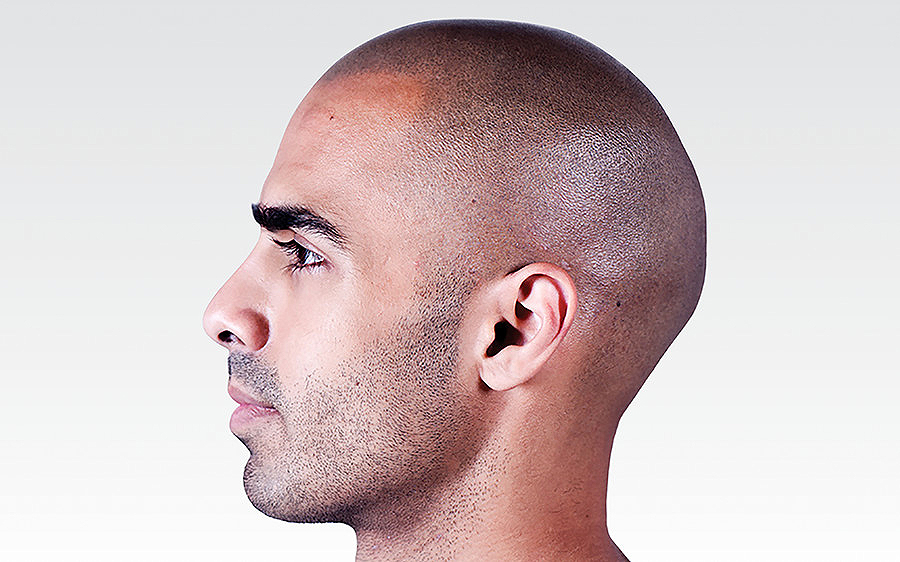
Free Toronto SMP Consultation — Send Photos for an Accurate Assessment
Scalp micropigmentation (SMP) is a cosmetic procedure that places tiny pigment impressions into the upper layers of the scalp to simulate the appearance of shaved hair follicles. When done correctly, SMP creates a visual illusion that reads as hair at normal conversational distance and in everyday lighting.
SMP is not designed to create hair or texture. Its purpose is to reduce contrast between scalp and hair by forming a realistic follicle field—not to replicate actual hair strands.
Scalp micropigmentation should not be confused with:
Traditional tattooing (different depth, intent, and long-term aging)
Hair transplantation (SMP does not grow new hair)
Hair systems or fibers (no physical hair or wash-off coverage)
Topical concealers (not temporary cosmetic camouflage)
Because SMP is a visual illusion, it has defined limits. It cannot create lift, movement, or three-dimensional hair density. Instead, it improves the appearance of hair loss by altering contrast and perceived coverage.
Many unsatisfactory SMP outcomes are caused by mismatched expectations, not technical failure. When SMP is pushed to behave like real hair—through excessive density or aggressive hairline design—it may appear convincing in photos but unnatural in real life.
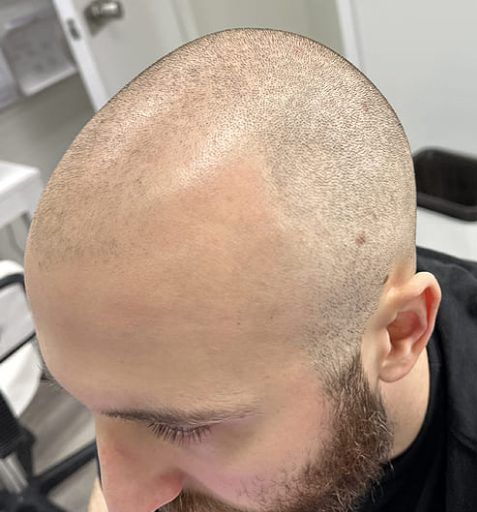
A well-executed scalp micropigmentation (SMP) result is often described simply: it does not draw attention to itself.
In everyday settings, natural-looking SMP shares a small set of consistent, observable characteristics.
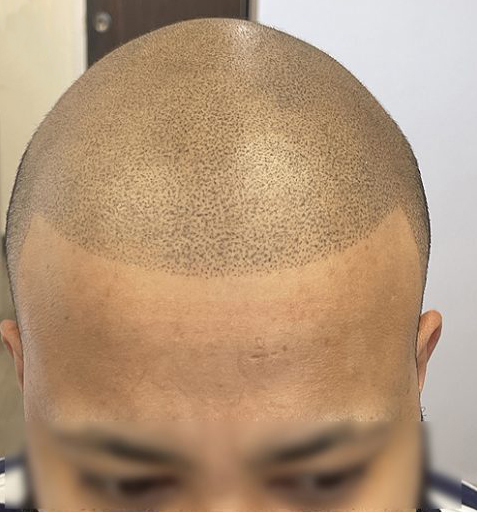
Natural SMP does not appear as sharply defined or identical dots. Instead, impressions are soft, follicle-like, and irregularly dispersed across the scalp.
At normal conversational distance, the result should read as a believable follicle field or shadow, not as individual markings or clustered points.
Real hairlines are rarely straight or perfectly symmetrical. Natural-looking SMP hairlines incorporate subtle irregularities and age-appropriate recession patterns.
Effective hairline design typically includes:
Age-appropriate placement
Soft transitions at the frontal edge
Natural temple behavior
Slight irregularity that appears intentional, not random
Overly sharp or “perfect” hairlines may look clean in isolation but often appear artificial in real-world conditions.
SMP pigment selection is based on how follicles visually appear on the skin, not simply on hair color. Skin undertone, scalp redness, contrast level, and lighting conditions all influence pigment choice.
Two individuals with similar hair color may require different pigment tones. Pigment that looks acceptable immediately after treatment can age poorly if undertone matching is incorrect.
Natural SMP remains believable across common real-life scenarios, including:
Indirect daylight
Overhead indoor lighting
Close conversational distance
Lighting can exaggerate spacing, dot size, and contrast. A realistic SMP result holds up across these environments rather than relying on controlled photography or flattering angles.
High-quality SMP is designed with the expectation that pigment will soften gradually over time. Conservative application tends to age more naturally and is easier to maintain.
Overly dark or aggressive SMP may look dramatic immediately after treatment but can fade unevenly or spread as it ages, increasing the likelihood of an artificial appearance.
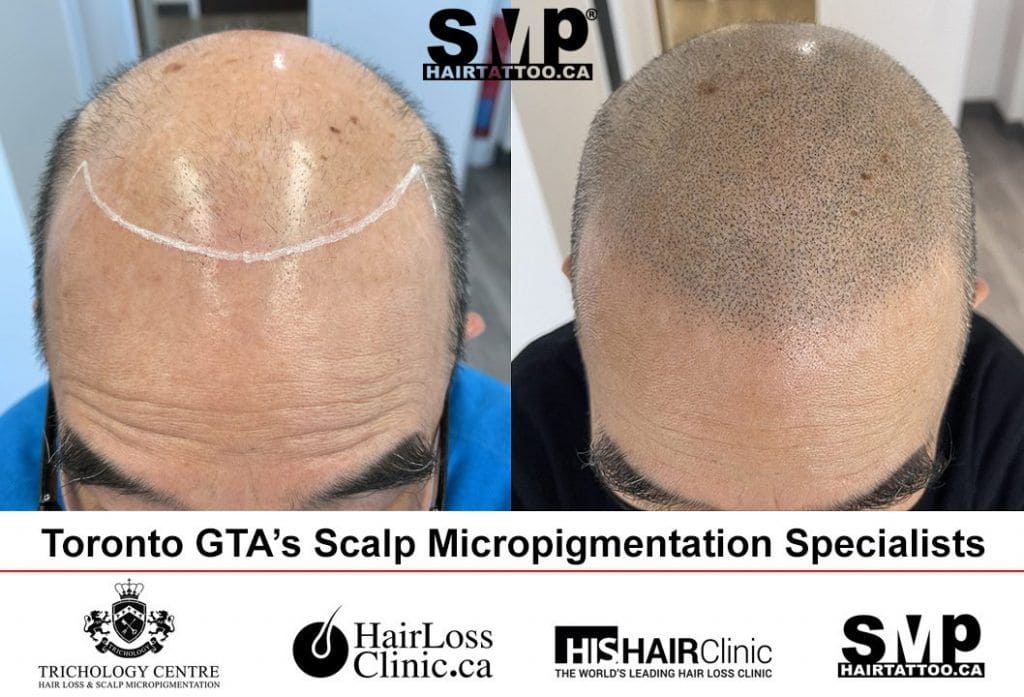
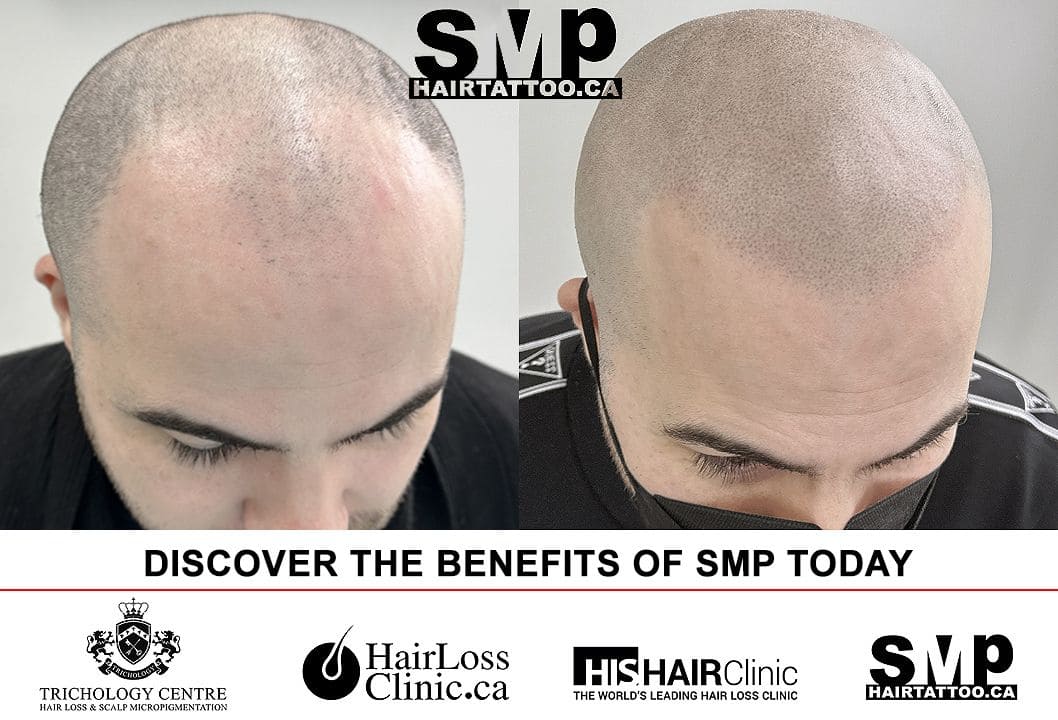
When scalp micropigmentation looks unnatural, there are usually identifiable causes. In nearly all cases, poor results come from technical or design decisions—not chance, skin type, or bad luck. Below are the most common reasons, explained in practical terms.
SMP requires extremely precise depth control. If impressions are placed too deep, pigment can spread beneath the skin over time, causing dots to appear larger or blurrier than intended. If impressions are too large, the follicle illusion breaks down and becomes a visible dot pattern.
This can result in SMP that appears:
Tattoo-like rather than follicle-like
Patchy or muddy
Heavy under certain lighting
Less crisp as it ages
Depth control is one of the primary differences between experienced and inexperienced SMP work. The same pigment, placed at the wrong depth, can age very differently.
A sharp, straight, “perfect” hairline may look bold in a before-and-after photo but often becomes an obvious giveaway in real life. Natural hairlines soften and recede with age. When a youthful, low hairline is paired with an aging face, the contrast can make SMP look artificial—even if the dot work itself is clean.
Hairlines that age best tend to be:
Slightly higher and more conservative
Soft-edged rather than sharply outlined
Designed to reflect realistic recession patterns
The issue is rarely skill alone—it’s often a mismatch between hairline design and the client’s age.
Some clinics aim for fast “wow” results by oversaturating early sessions. While this can look impressive immediately and photograph well, overly dense SMP often ages poorly.
Common long-term issues include:
Uneven healing
Unpredictable fading across scalp zones
Difficulty blending with natural hair changes
More aggressive maintenance requirements
A conservative build—layering density gradually over multiple sessions—typically produces more natural results and more stable aging.
Pigment selection isn’t only about darkness—it’s about temperature. If pigment choice doesn’t match the client’s skin undertone and how follicles naturally appear on their scalp, color shifts can emerge over time.
Poor pigment matching may appear:
Too cool or ashy
Too warm
Gray under harsh lighting
Unnatural when the scalp flushes, tans, or becomes irritated
Pigment that looks acceptable immediately after treatment can age poorly if undertone matching is incorrect.
Natural follicles aren’t evenly spaced like a grid—but they also aren’t random. Quality SMP uses a controlled, natural distribution pattern that avoids visible repetition, dense clusters, or empty patches.
This is often the kind of issue that doesn’t stand out in a quick photo but becomes noticeable in real life.
Important: Most unnatural SMP results aren’t caused by one major mistake. They are usually the result of several small errors adding up—such as a hairline that’s too sharp, density that’s too dark, dot size that’s too large, and patterning that’s too uniform.
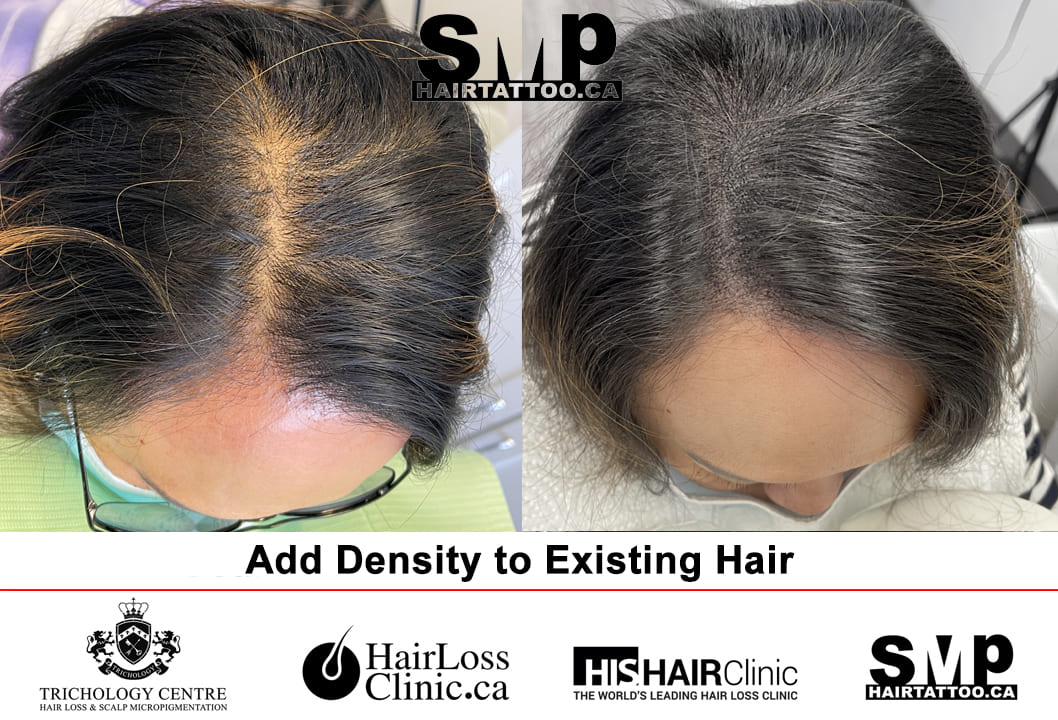
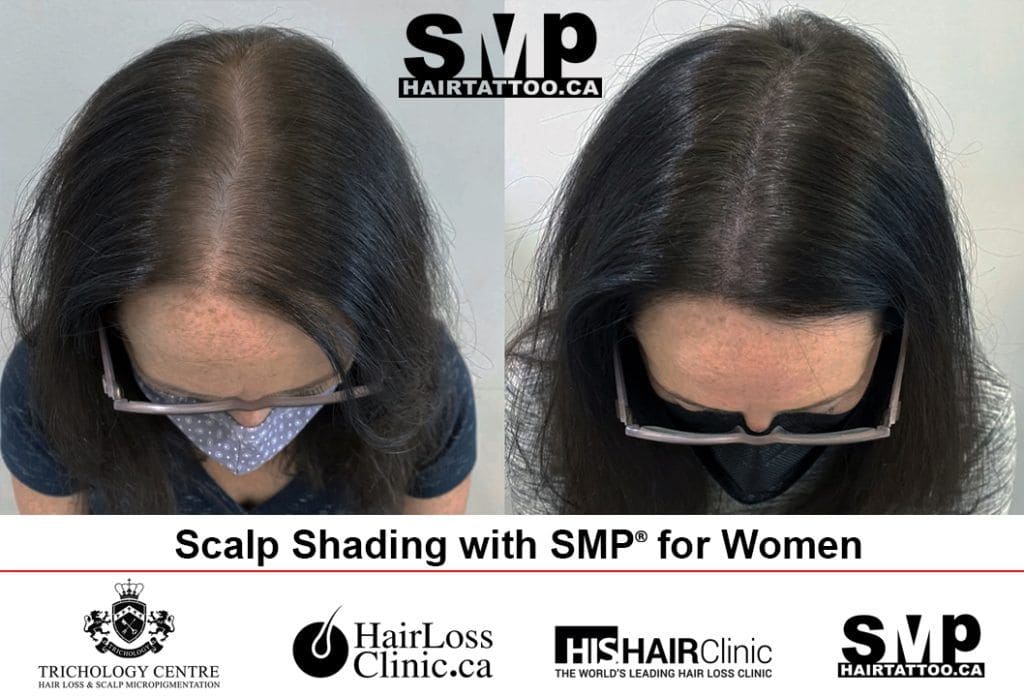
A lot of confusion comes from comparing fresh SMP to healed SMP. Healing matters.
Most disappointment around SMP results comes from judging the work too early, before the scalp has fully settled.
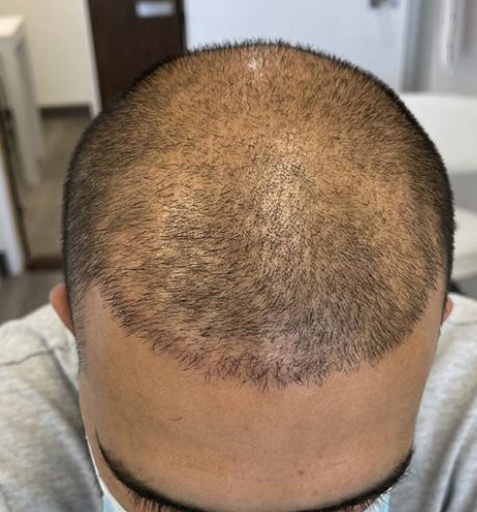
Fresh SMP often looks darker, sharper, and more dramatic. The skin can be slightly inflamed, and tiny scabs may create the impression of stronger dots. This phase does not represent the final result.
The scalp begins to settle. Some pigment may appear to lighten as the skin heals, and small inconsistencies can become noticeable. This is normal and is one reason reputable SMP is performed in multiple sessions, allowing adjustments based on how the scalp heals.
Healing speed and pigment retention vary by skin type, scalp condition, and aftercare, which is why early appearance should not be overanalyzed.
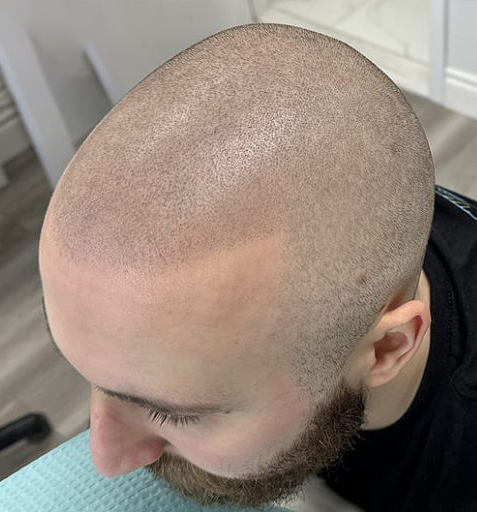
The work looks more natural. Dots soften, and the overall effect becomes more blended. This phase is closer to how the SMP will ultimately appear, though subtle changes can still occur.
Even at this stage, minor refinements are normal, and final judgment should wait until full maturation.
The scalp’s behavior becomes more predictable. This is when you can accurately evaluate:
Whether density appears even
Whether the hairline design feels natural
Whether pigment tone matches your skin under different lighting conditions
This phase represents the most realistic version of your SMP.
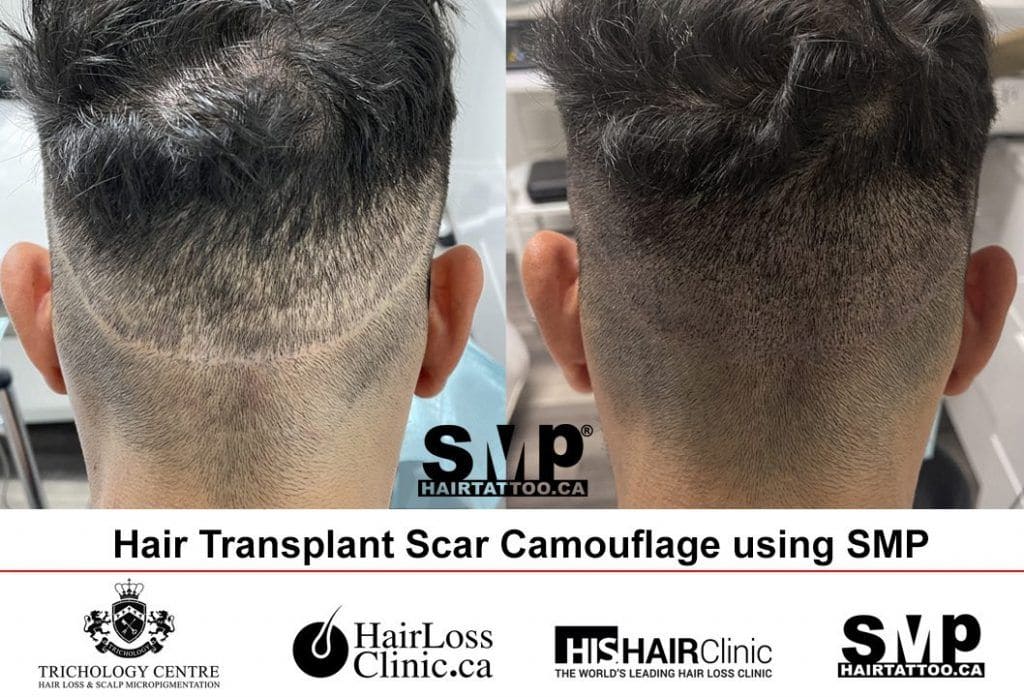
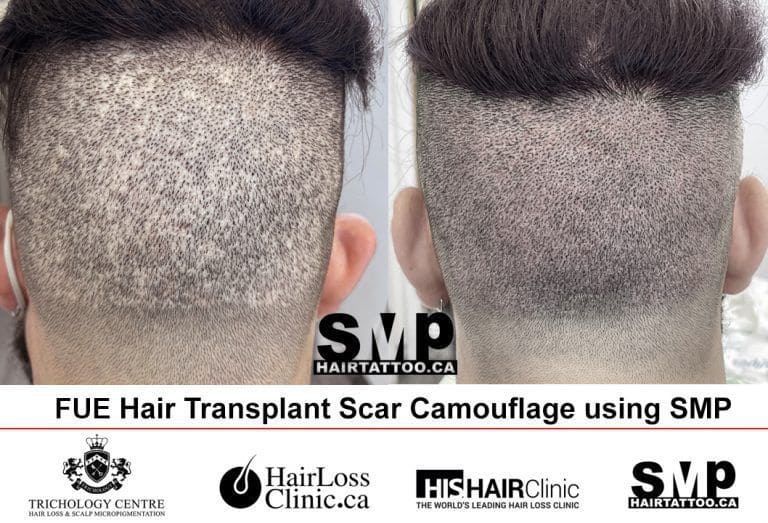
Scalp micropigmentation is not static. It changes gradually over time. That doesn’t mean it “fails”—it means it behaves like pigment in skin, not hair. Understanding how SMP ages is critical to setting realistic expectations and evaluating whether a result is truly well done.
This timeline reflects real-world SMP aging observed across thousands of cases, not short-term photo results or marketing claims. In clinics across Toronto and the GTA, long-term outcomes tend to follow this same pattern when conservative technique and proper planning are used.
Most clients experience stable realism when SMP is performed correctly. After the early healing phase, the appearance often becomes more natural and better blended with the scalp. Minor touch-ups may be considered depending on skin type, lifestyle, and sun exposure, but many clients do not need any maintenance this early.
This is where differences between conservative work and aggressive work begin to show. Well-executed SMP typically remains believable and balanced. Poorly executed SMP may start to lose crispness or shift slightly in tone. Factors such as sun exposure, oily scalp, and inconsistent aftercare can accelerate visible changes during this stage.
Many clients consider maintenance during this period, particularly if they spend significant time outdoors or have oilier skin. Conservative SMP tends to fade more evenly and is easier to refresh. Overly dark or dense SMP may fade unevenly, making maintenance more difficult without the result appearing heavy again.
Long-term outcomes depend heavily on the original technique and design choices. Conservative work often ages best because it does not fight the scalp’s natural changes over time. Hairline designs that were too youthful or too sharp can begin to look artificial as facial features and skin continue to age.
A realistic way to think about SMP is that it is long-lasting, not permanent ink. The goal is an illusion that remains believable over time, with maintenance performed as needed—not a result that stays frozen forever.
Skin biology plays a significant role in pigment retention, fade rate, and how crisp impressions remain over time. Skin type does not determine whether SMP will work—it determines how the approach and maintenance plan should be adjusted.
Oily skin can contribute to faster fading and reduced definition. In these cases, conservative density and realistic maintenance expectations are essential. Attempting to “fight oil” by going darker often backfires, creating heavy results early on and uneven aging later.
Thinner or more mature skin can be more prone to pigment spread if depth is not carefully controlled. When performed correctly, however, mature skin often produces very natural-looking SMP because the final appearance tends to soften rather than look harsh.
Chronic inflammation can complicate healing and pigment retention. If the scalp is frequently irritated, pigment may heal less evenly. A careful consultation and conservative planning are especially important in these cases.
Scar tissue behaves differently than normal scalp skin. SMP can significantly reduce contrast and visibility, but results depend on scar type, texture, and how the tissue holds pigment. Scar camouflage often requires specialized planning and conservative expectations.
Key takeaway: Skin type does not “doom” SMP results. It changes the strategy. A skilled practitioner adjusts technique, density, and design to match your scalp’s biology and long-term behavior.
When someone says scalp micropigmentation looks fake, they’re usually reacting to one or more specific, real-world issues—not the concept of SMP itself. In consultations at our Toronto-area clinics, these are the most common reasons clients point out when evaluating SMP results in person:
The hairline looks too perfect, too straight, or set too low
The dots are too large or too visible at conversational distance
The density is too dark for the person’s age or skin tone
The color looks off in natural daylight
The pattern appears uniform, like a grid
The result only looks good in photos, not in real life
This list is useful because it shifts the conversation from emotion to evaluation. You’re not deciding between “good” or “bad.” You’re asking a more important question: does this result hold up in real-world conditions?
Some SMP issues can be corrected. Some can only be partially improved. Others require lightening or removal before meaningful correction is possible. The right approach depends on several factors, including:
How deep the pigment sits in the skin
How saturated the scalp already is
Whether the pigment color is stable
Whether the hairline design itself is the issue
Skin condition, scarring, or inflammation
Corrective SMP is usually more complex than initial work because the practitioner must work around existing pigment. This is why conservative planning matters so much from the beginning. Prevention is typically faster, less expensive, and more predictable than repair.
If you’re choosing SMP for the first time, a smart question to ask a clinic isn’t “How dark can you make it?”
It’s “How do you keep this looking natural as it ages—and what happens if my scalp heals unpredictably?”
Many SMP images online share characteristics that make results appear better than they are in real life:
Photos taken immediately after treatment (the darkest stage)
Controlled studio lighting that minimizes texture
Tight close-ups that hide overall design
Filters or color correction
Only showing the “best angle”
In contrast, a trustworthy SMP portfolio—especially from an experienced Toronto clinic—includes:
Fully healed results (weeks or months post-treatment)
Photos taken in natural daylight
Multiple angles (front, sides, crown)
Both close-ups and conversational-distance views
A range of skin tones and hair-loss patterns
If a portfolio only shows fresh results, it tells you very little about long-term realism.
In our experience working with clients across Toronto and the Greater Toronto Area, scalp micropigmentation tends to deliver the most natural, long-term results for people who:
Prefer a shaved or closely cropped hairstyle
Want to reduce scalp contrast and create a natural hairline illusion
Have stable hair-loss patterns (or understand that hair loss may continue)
Understand that SMP creates a follicle illusion, not actual hair density
Are comfortable with occasional maintenance if needed over time
SMP can also work well for some clients who have previously had hair transplants and want to reduce contrast, blend thinning areas, or improve overall balance—depending on scalp condition, donor density, and long-term goals discussed during consultation.
Clear expectations are essential to achieving results you’ll be happy with years down the road.
Regrow hair
Create true three-dimensional hair density
Replace a long or styled hairstyle
Make a bald scalp feel like hair to the touch
Look identical in every lighting environment if pushed too dark
Restore the appearance of a natural hairline
Create the look of a clean, closely shaved, fuller scalp
Improve facial framing and visual balance
Reduce contrast between scalp and hair
Camouflage certain scars and thinning zones
Increase confidence for clients who prefer a sharp, low-maintenance aesthetic
Clear expectations aren’t negative—they’re what protect you from regret.
A proper consultation isn’t a sales pitch. It’s a reality check.
When speaking with an SMP clinic in Toronto or the surrounding area, these are high-signal questions that reveal experience, honesty, and long-term thinking:
Can you show healed results taken in natural daylight?
How do you design hairlines so they still look natural as someone ages?
How do you adjust technique for oily scalps versus dry or mature skin?
What does your maintenance philosophy look like over the next 3–5 years?
Do you perform corrective SMP? If so, what mistakes do you see most often?
What would make you recommend that someone not proceed with SMP?
How many sessions do you typically recommend, and why?
What differences should I expect between month 1, month 6, and year 2?
A clinic that answers these questions clearly and comfortably is usually a safer choice than one that relies only on dramatic “after” photos.
HairTattoo.ca is a Toronto-based scalp micropigmentation clinic offering non-surgical cosmetic scalp pigmentation for the appearance of fuller hair, reduced scalp visibility, and natural hairline framing. Our focus is conservative SMP design, corrective work, and long-term outcomes—built around how pigment heals, how skin behaves, and how results look in everyday lighting.
Clients visit us from Toronto and across the GTA for realistic SMP planning, honest expectations, and results designed to remain believable over time.
Quick summary:
Scalp micropigmentation results look most natural when density is built conservatively, pigment is matched to skin undertone, and hairlines are designed to age realistically. Overly dark or aggressive SMP may look dramatic in photos but often ages poorly in real life.
Yes. SMP is designed to soften and gradually fade over time. The rate varies based on skin type, sun exposure, lifestyle, and how conservatively the work was performed initially.
Color shifts are more likely when pigment selection or placement depth is poorly controlled. Conservative technique and correct pigment choice—matched to skin undertone rather than just hair color—significantly reduce this risk.
No. SMP is performed in the superficial layers of the skin and does not stop hair growth or damage follicles.
When done correctly, SMP should look natural at conversational distance and not appear as obvious dots. Very close inspection may reveal pigment, but the goal is realism in everyday interaction—not magnified scrutiny.
SMP is long-lasting, but it is not “unchanged forever.” Most clients experience gradual softening over the years and may choose maintenance treatments depending on skin type and lifestyle.
High-quality SMP is typically built over multiple sessions. This allows the practitioner to evaluate healing and safely adjust density and tone for a more natural, stable result.
No. Darker results are often riskier. Conservative SMP tends to age better and remain more natural under varied lighting conditions.
The practitioner’s technique, judgment, and experience matter most. Equipment supports execution, but it does not replace skill.
This page is for educational purposes only and does not replace professional medical advice or an in-person consultation. Individual results vary based on skin type, scalp condition, treatment plan, aftercare, and practitioner technique. A personalized consultation at our Toronto-area clinic is essential to determine suitability and expected outcomes.
HairTattoo.ca provides scalp micropigmentation consultations and treatments in Toronto, Thornhill, Winnipeg, and Edmonton, serving clients across the Greater Toronto Area (GTA) and surrounding regions. In-person consultations available by appointment at select HairTattoo.ca clinic locations.
HAIRTATTOO.CA is the No.1 Scalp Micropigmentation clinic in Toronto Canada, offering a revolutionary hair loss solution that has transformed the lives of countless Canadians.
© 2026 HAIRTATTOO.CA | Scalp Micropigmentation & Trichology Centre
