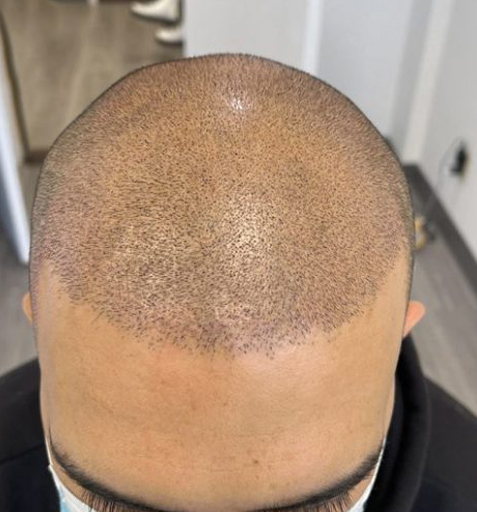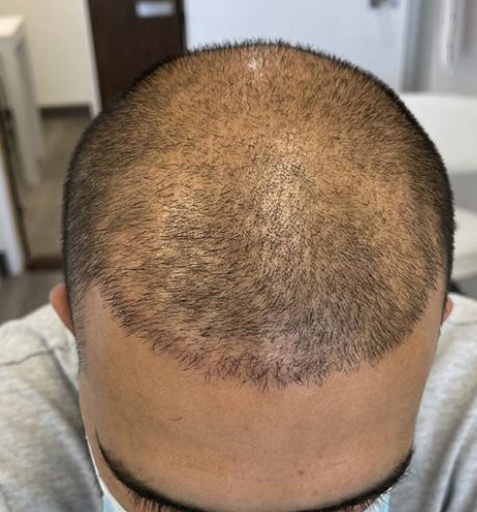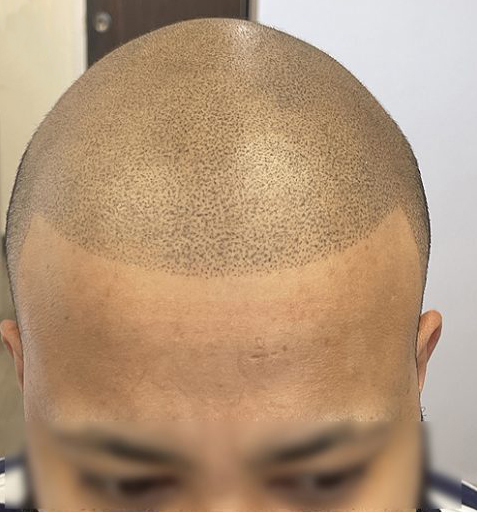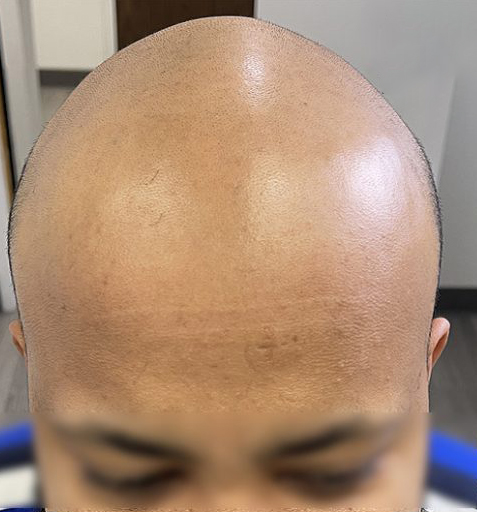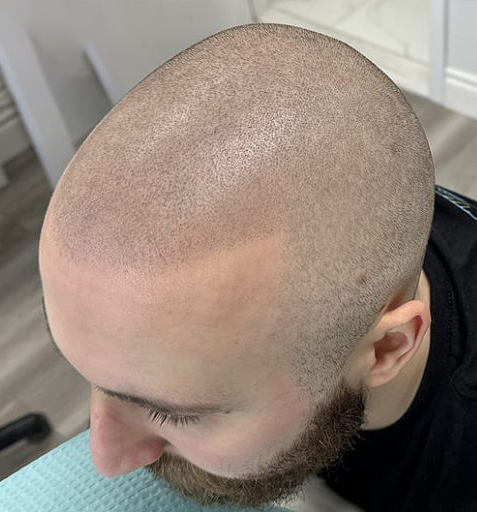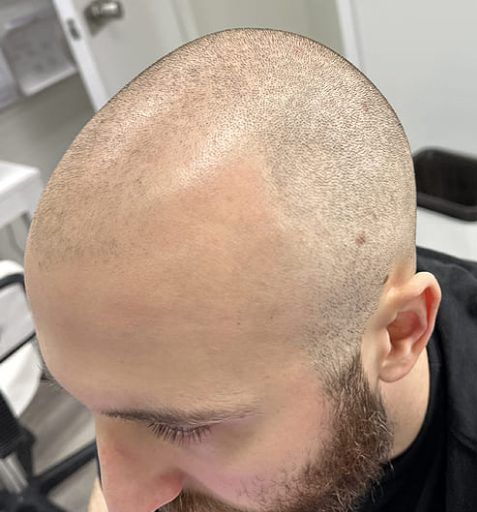
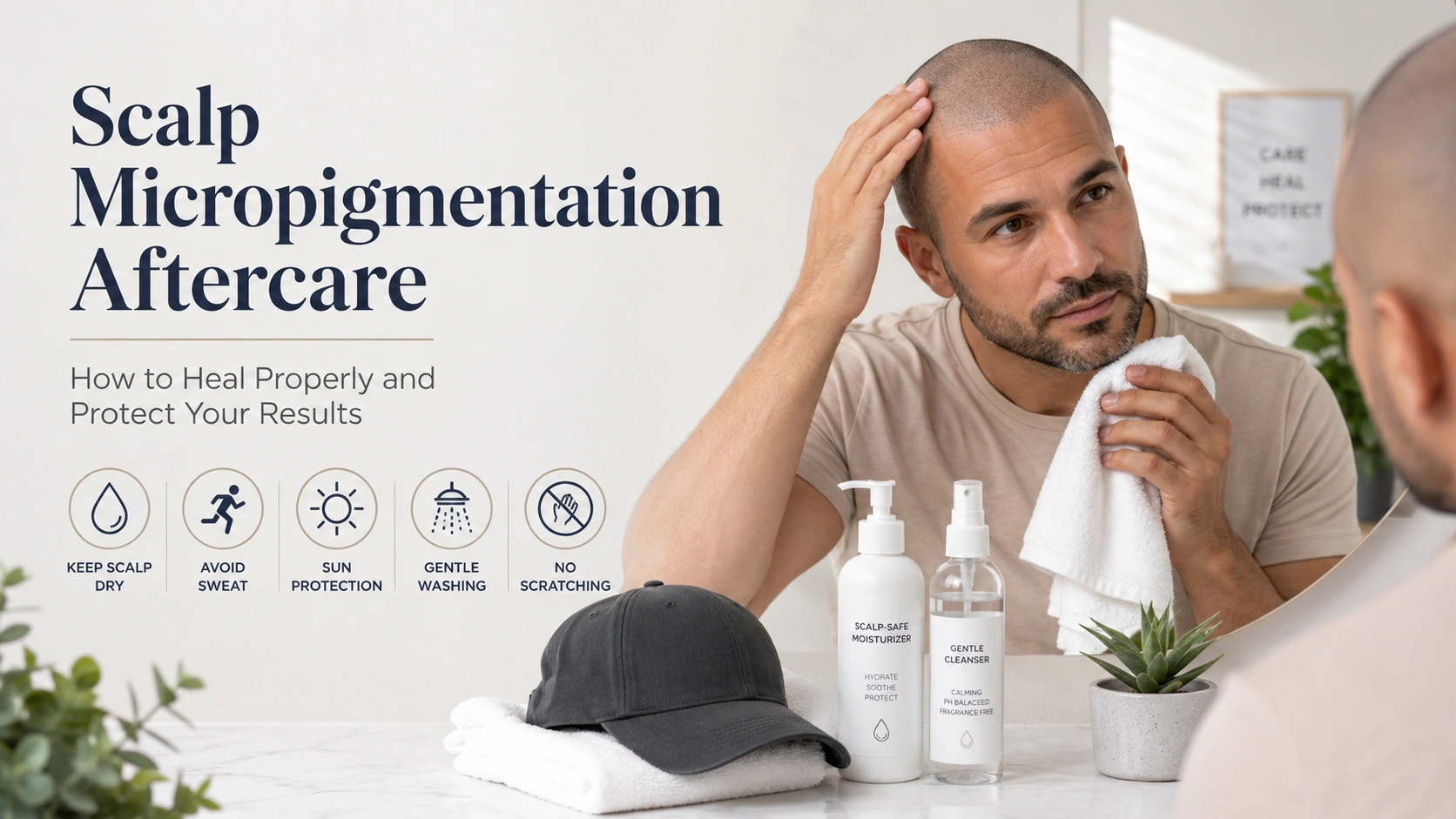
Scalp Micropigmentation Aftercare means protecting your scalp while the fresh pigment settles. In the first few days, keep the treated area dry, avoid sweat, stay out of direct sun, and do not scratch or rub the scalp. You should also avoid shaving, swimming, saunas, steam rooms, and strong scalp products until your clinic says they are safe. These steps help the scalp heal calmly and support a cleaner final result.
The first week is not about doing more to the scalp. It is about avoiding pressure, heat, friction, and moisture that can disturb the healing stage. Fresh SMP dots need time before your normal routine starts again. A calm healing period can help reduce irritation, dryness, and uneven settling.
This guide explains aftercare in a simple step-by-step way. You will learn what to do on the first night, when to wash, how to manage sweat, when to shave, and which products to avoid. It also covers common mistakes that can affect healing. Always follow the exact timeline given by your SMP artist because every scalp and session plan can be different.
Table of Contents
| Care Step | What It Means |
| Keep the scalp dry | Do not wash or soak the treated area too early. |
| Avoid sweat | Pause hard workouts, hot yoga, and sauna use during early healing. |
| Do not scratch | Let the scalp settle without picking, rubbing, or touching it often. |
| Wash gently | Use a soft routine only when your clinic allows washing. |
| Return slowly | Bring shaving, gym, hats, and products back step by step. |
The first week is not about doing more. It is about doing less so the treated skin can settle without pressure, heat, or friction. Fresh SMP dots need time before your normal routine starts again. A calm healing period can help reduce irritation and uneven settling.
This guide explains Scalp Micropigmentation Aftercare in a simple step-by-step way. You will learn what to do on the first night, when to wash, how to handle sweat, when to shave, and which products to avoid. It also covers common mistakes that can affect healing. Use this as a clear guide, but always follow the exact timeline given by your own SMP artist.
Your aftercare starts before you go home. Ask your artist what you can do on the same day and what you must avoid.
Do not guess the timeline because every session can be different. A first session, follow-up session, density session, and correction session may not all heal in the same way.
Before leaving, ask:
Clear answers make aftercare easier. They also stop you from following random advice that may not match your treatment plan.
The first night is mainly about keeping the scalp clean and untouched. Do not wash the treated area unless your clinic gives different instructions.
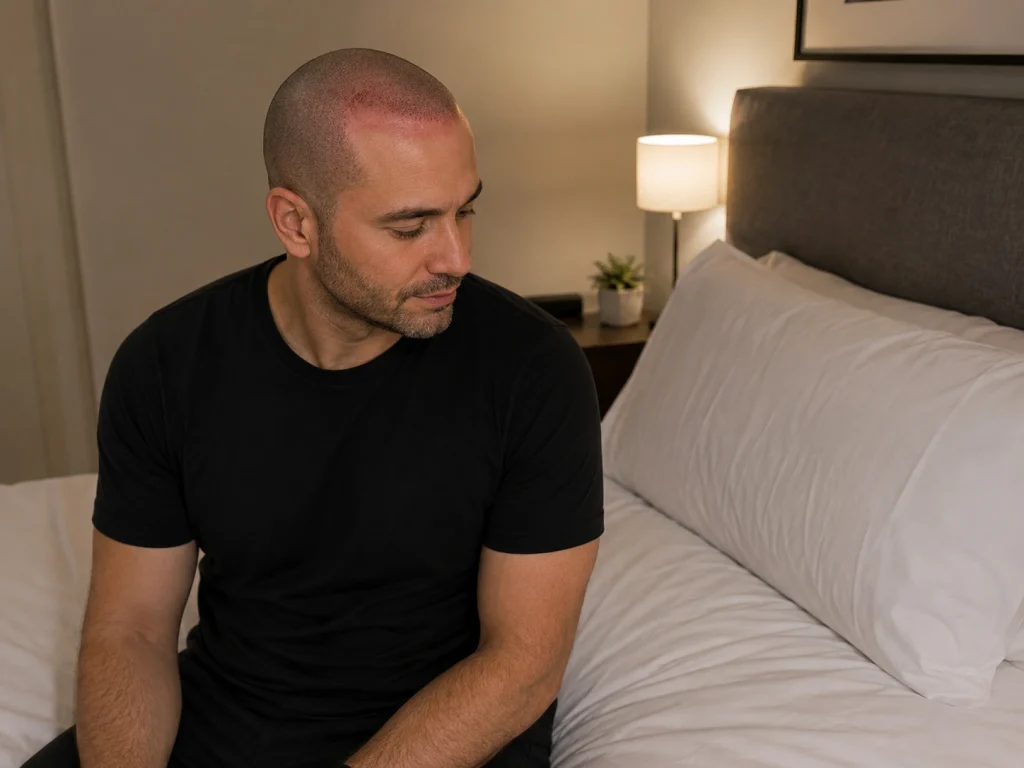
Sleep on a clean pillowcase and avoid rubbing your head against the pillow. If your scalp feels tight, do not scratch it or apply random creams.
On the first night:
Your scalp may look red or feel sensitive. Mild discomfort can happen, but anything that feels unusual should be checked with your clinic.
The first 24 hours are a protection window. The skin is fresh, so pressure, sweat, and moisture can make healing less comfortable.
Do not clean the scalp aggressively. Do not use shampoo, soap, scrub, perfume, hair products, or makeup on the treated area unless your clinic approves it.
Avoid:
This stage is short, but it matters. Simple care is safer than trying to speed up healing.
Days two to four are still part of early healing. The scalp may feel dry, tight, or slightly itchy.
Do not pick at the area, even if tiny flakes appear. Let the skin settle naturally so the pigment can heal more evenly.
| Do | Do Not |
| Keep the area calm | Scratch the scalp |
| Stay in cool spaces | Use saunas or steam rooms |
| Avoid hard training | Let sweat sit on the scalp |
| Wear loose protection if needed | Wear tight hats |
| Follow clinic timing | Copy random online routines |
If you need to go outside, avoid long direct sun exposure. A loose clean hat may help if your clinic allows it, but it should not rub or trap sweat.
Washing should start only when your clinic says it is safe. When washing is allowed, keep it simple and gentle.
Use lukewarm water instead of hot water. Pat the scalp dry with a clean towel instead of rubbing it.
When washing is allowed:
The goal is to clean the scalp without disturbing the healing area. Strong rubbing can cause irritation and make the scalp feel more sensitive.
Shaving after SMP should not be rushed. Wait until your artist confirms that the skin is ready.
When you return to shaving, use clean tools and light pressure. Do not drag a razor across skin that still feels tight, red, or irritated.
| Scalp Condition | Better Choice |
| Red or sore scalp | Wait and ask your clinic |
| Dry or tight scalp | Do not scrape or pick |
| Settled scalp | Use clean electric tools carefully |
| Before follow-up session | Ask if shaving is needed |
| Irritated skin | Pause shaving until reviewed |
Shaving is part of the final look, but timing matters. A careful routine helps your SMP blend better with your natural hair stubble.
Sweat can irritate fresh SMP during early healing. This is why hard workouts should wait until your clinic clears you.
Avoid gym sessions that make you sweat heavily. Hot yoga, long runs, saunas, steam rooms, and intense lifting can all create heat and moisture on the scalp.
Return in stages:
For clients in Toronto or the GTA, this matters during summer gym routines and outdoor training. A short pause can protect the treatment better than rushing back too early.
Hats can protect your scalp, but timing and fit matter. A tight hat can rub fresh skin and trap sweat.
If your clinic allows a hat, choose one that is clean, loose, and soft inside. Avoid dirty caps, hard seams, helmets, and anything that presses on the treated area for too long.
Use a hat carefully by choosing:
A hat should protect the scalp, not irritate it. If it causes friction, remove it and ask your clinic what to do.
Fresh SMP should be kept away from direct sun. Heat can make the scalp sweat and direct UV exposure can stress the treated area.
After the scalp has healed, sun care becomes part of normal maintenance. Use scalp-safe SPF when approved and cover the scalp during long outdoor exposure.
Avoid:
Toronto summers can make scalp care harder because sun and sweat often happen together. Plan outdoor time carefully until your scalp is fully healed.
Fresh SMP does not need a complicated product routine. Strong products can irritate the scalp and make healing harder.
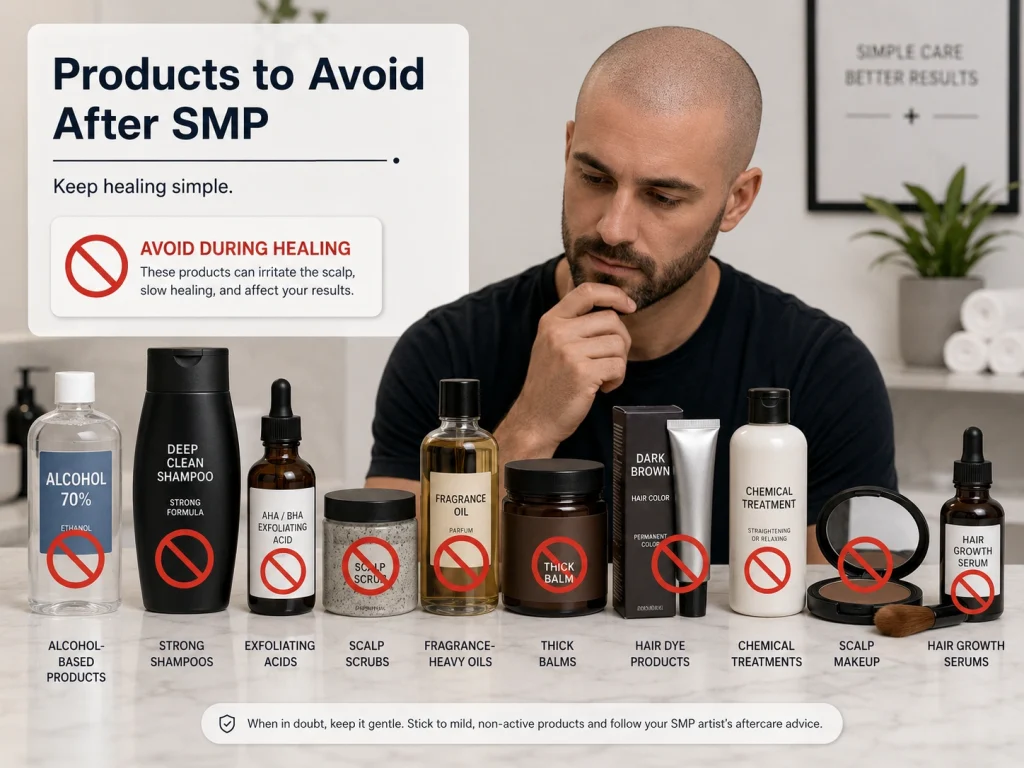
Do not apply anything new without checking with your clinic. Even normal skincare products can be too harsh for treated skin.
During healing, avoid:
Simple care is usually better. If you are not sure about a product, send a photo or product name to your clinic before using it.
Many SMP aftercare problems happen because clients return to normal too fast. Small mistakes can irritate the scalp and make healing less predictable.
The safest approach is to follow the timeline and avoid testing the scalp too early. If your artist says to wait, wait.
Common mistakes include:
These mistakes are avoidable. A simple checklist can help you protect the result during the most sensitive days.
You can return to normal life gradually after the early healing stage. The exact timing should come from your SMP artist.
Do not bring everything back at once. Start with gentle washing, then light activity, then shaving, then stronger routines when the scalp feels settled.
Before returning fully, check:
This section makes Scalp Micropigmentation Aftercare easier because it turns the process into clear steps. You do not need to guess when your scalp is ready.
A follow-up session may need the same care as the first session. Even if less work was done, the scalp still needs time to settle.
Do not treat a touch-up casually. Ask your artist if the same washing, gym, shaving, and sun rules apply.
Before a follow-up:
Good follow-up care helps the artist refine the final look. It also keeps the scalp from becoming overworked.
Some redness, tightness, dryness, or mild itching can happen after treatment. Still, you should contact your clinic if something feels unusual.
Do not try to fix the scalp with home remedies. Your clinic understands your session plan and can guide you more safely.
Contact your clinic if you notice:
Fast advice can prevent small issues from becoming bigger. It is better to ask early than to make the wrong change at home.
No, not right away unless your clinic says it is safe. Most clients need to keep the scalp dry during the early healing stage. When washing is allowed, use lukewarm water and avoid hard rubbing.
No, avoid heavy workouts during early healing. Sweat can irritate the scalp and may affect how the pigment settles. Return to exercise only when your clinic clears you.
Yes, but only after your clinic says the scalp is ready. Shaving too soon can irritate fresh skin and disturb the treated area. Use clean tools and light pressure when you start again.
Yes, but only if it is loose, clean, and does not rub the treated area. Tight hats can trap sweat and create friction during early healing. Ask your clinic if you need to cover the scalp right after treatment.
Most early healing happens within the first several days. The color can look darker at first and then soften as the scalp settles. Follow your clinic’s timeline before judging the final result.
Yes, but only when your clinic allows it. Moisturizer may help dryness after the early healing stage, but using it too soon may not be suitable. Choose a gentle product approved by your artist.
No, swimming should be avoided during early healing. Pools, lakes, hot tubs, and salt water can irritate the scalp before it is ready. Wait until your clinic confirms it is safe.
Avoid sweat, swimming, saunas, steam rooms, scratching, strong products, direct sun, and shaving too soon. These can irritate the scalp during the healing stage. Follow your clinic’s aftercare schedule for the safest routine.
Yes, mild itching can happen while the scalp heals. Do not scratch because it can irritate the treated area. If itching feels strong or unusual, contact your clinic for advice.
Aftercare is important because fresh SMP needs time to settle without irritation. Good care can help reduce dryness, discomfort, and uneven healing. It also helps you return to normal washing, shaving, and exercise safely.
Scalp Micropigmentation Aftercare is mainly about timing, patience, and gentle scalp care. Keep the scalp dry early, avoid sweat and sun, and do not rush washing or shaving. Use only approved products and bring your normal routine back slowly. These steps help the scalp heal with less irritation and better comfort.
The most important rule is to follow your artist’s instructions before anything else. Your skin type, session type, and treatment area can change the aftercare timeline. If you are unsure about a product, workout, hat, shower, or shaving routine, ask your clinic first. Careful aftercare gives your SMP the best chance to settle cleanly and look natural.