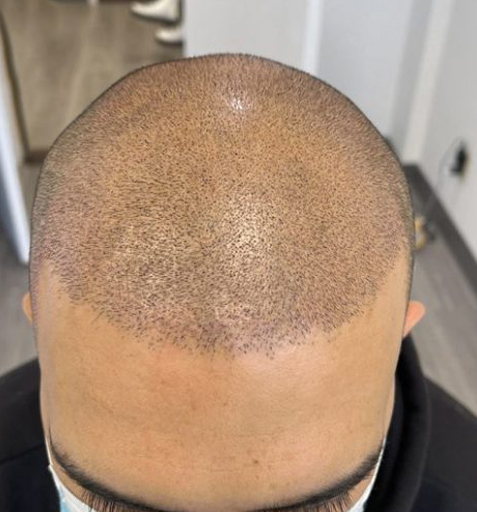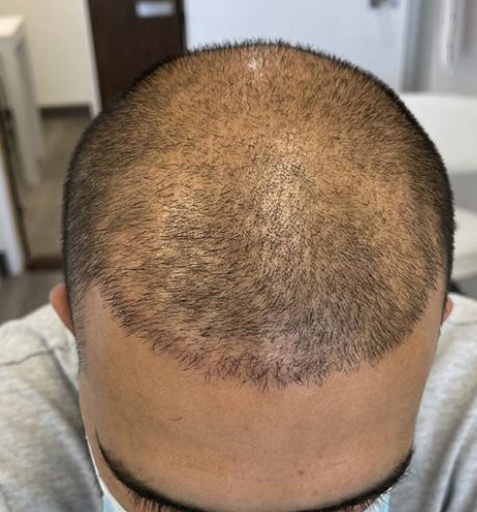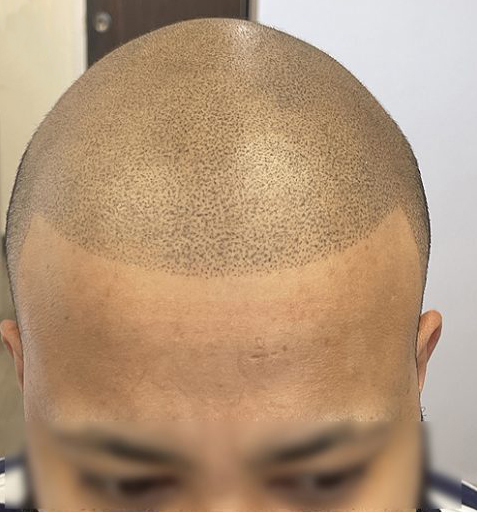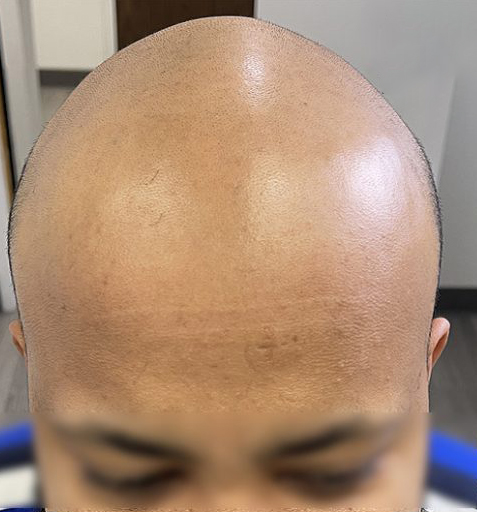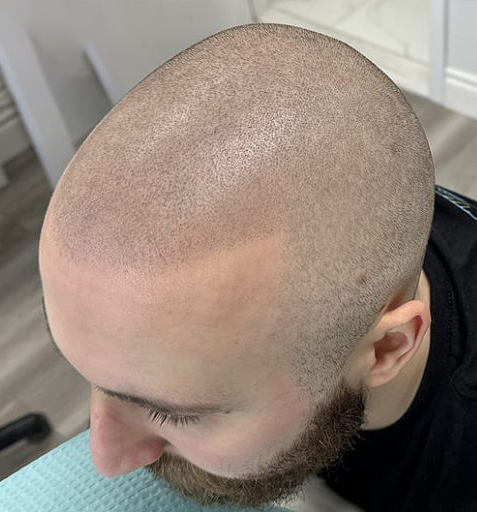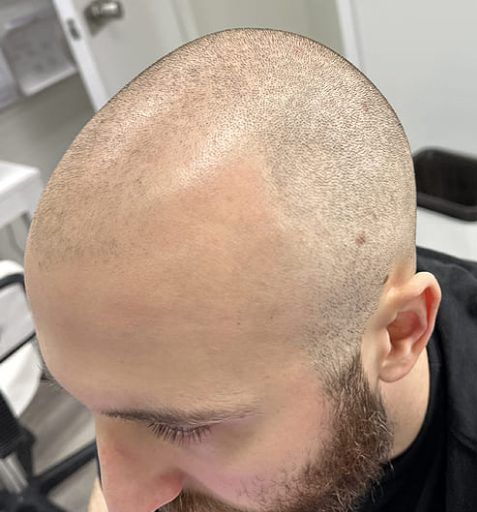
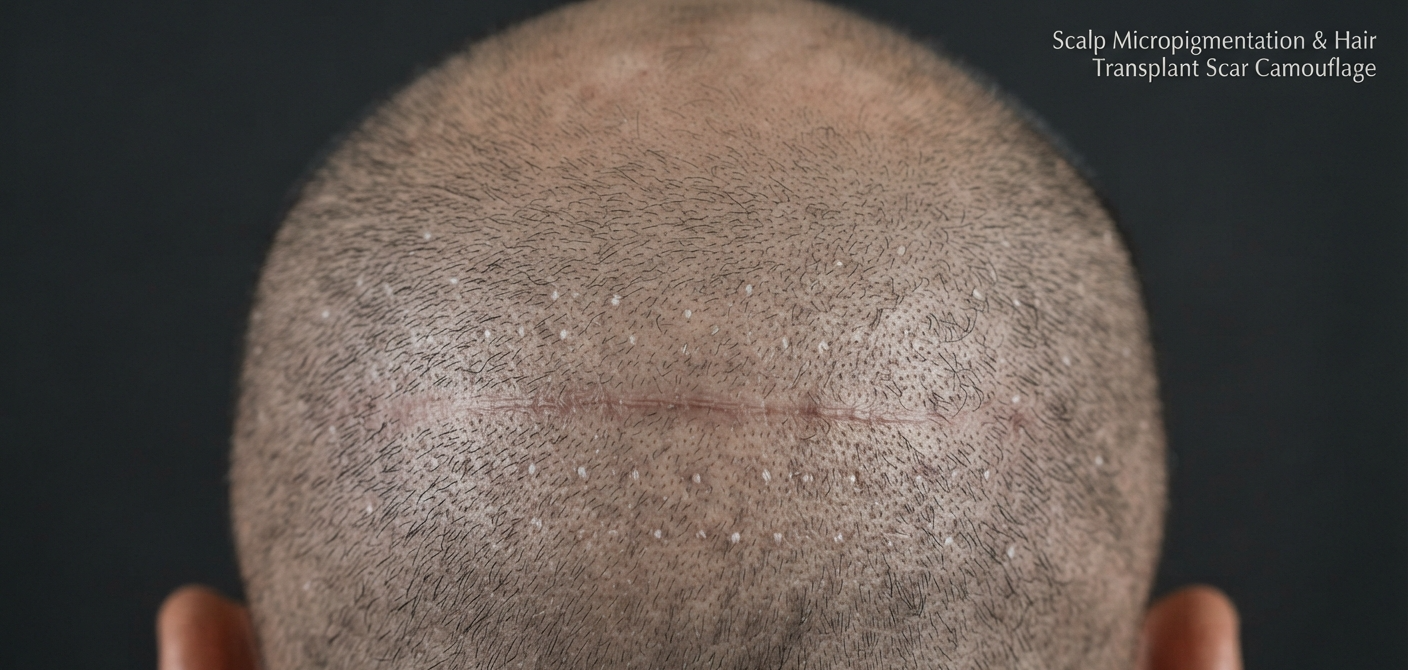
Yes, SMP can make healed FUE and FUT scars less noticeable by placing tiny pigment impressions in and around the donor area. The search phrase “Scalp Micropigmentation Hide Hair Transplant” refers to this cosmetic blending method, which lowers the contrast between pale scar tissue and nearby shaved hair. It does not remove scar tissue or make hair grow. The goal is to create a softer, more even look from a normal viewing distance.
Many people in Toronto and the GTA consider scar camouflage because a short haircut can expose marks left by hair transplant surgery. FUE procedures may leave small dot scars, while FUT surgery may leave a narrow line across the back or sides of the scalp. A suitable plan depends on the scar’s age, colour, texture, width, and surrounding hair density. A trained practitioner should assess the area before recommending treatment.
Table of Contents
Scar camouflage works by reducing the visible difference between the scar and the surrounding scalp. A practitioner places small pigment dots that copy the size, spacing, and shade of nearby shaved follicles.
The treatment may help with:
The finished work should not look like a dark patch painted over the scar. It should break up the shape of the mark so the eye does not focus on one bright line or cluster of dots.
SMP is normally considered after the scar has fully healed and stopped changing. The International Society of Hair Restoration Surgery advises waiting at least one year after a hair transplant because hair growth and skin healing can continue for many months.
A scar may be suitable for assessment when it is:
People who form keloids or have active scalp inflammation, painful skin, or a changing scar should speak with a qualified healthcare professional before treatment. Cleveland Clinic notes that SMP may not be suitable for people who are prone to keloid scarring.
The process starts with a detailed consultation. The practitioner checks the donor area, asks when the transplant was completed, reviews the preferred haircut, and looks at the scar under clear lighting.
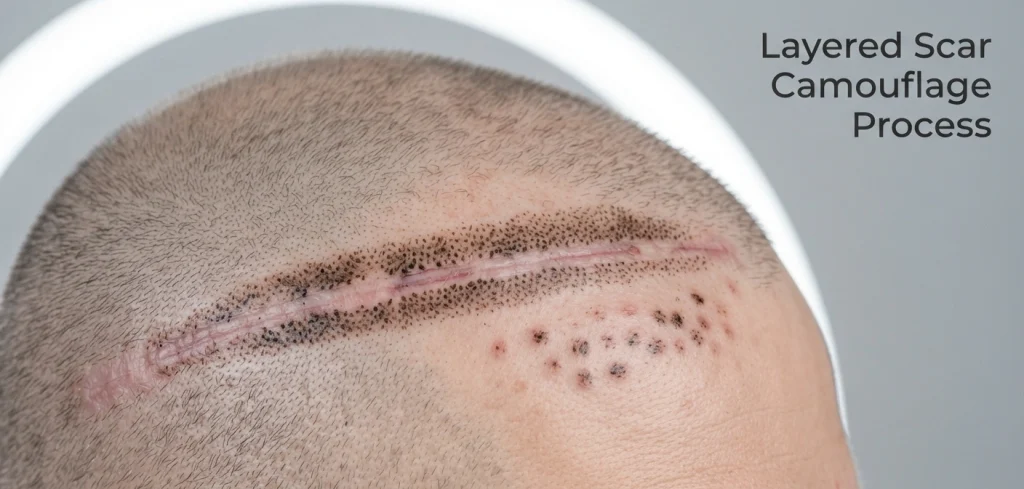
Pigment selection should match the appearance of the client’s natural follicles rather than the colour of longer hair. The practitioner then plans the dot size, spacing, shade, and density around the scar.
Treatment is usually built in light layers. This approach reduces the risk of making the scar darker than the surrounding scalp and allows adjustments after the skin heals.
Most scar camouflage plans need more than one appointment because each session adds depth and detail. Cleveland Clinic states that several treatments may be required, with the exact number depending on the treatment area and individual plan.
A realistic result makes the scar less noticeable. It does not remove the scar, repair the skin, or replace missing hair follicles.
After healing, clients may notice:
Very close inspection may still show differences in texture or colour. Raised, wide, indented, or strongly discoloured scars may remain partly visible after careful treatment.
Be cautious with any claim that SMP will erase a scar or guarantee an invisible result. The correct goal is camouflage that suits the skin, scar, hair pattern, and chosen clipper length.
Toronto clients often seek donor scar camouflage after having surgery in Canada or abroad. Some are satisfied with their transplanted hair but want more freedom to wear a shorter style without exposing a strip scar or groups of FUE dots.
People travelling from Mississauga, Brampton, Richmond Hill, Markham, Hamilton, or other GTA communities should ask how many visits may be needed before booking. Hair Tattoo lists scar camouflage among its SMP services and provides treatment at several Ontario clinic locations.
When people search “Scalp Micropigmentation Hide Hair Transplant,” they are often comparing scar-only treatment with wider density work. The consultation should confirm whether the donor scar can be treated alone or whether the surrounding area also needs blending for a balanced result.
Follow the clinic’s written aftercare instructions because scar tissue may heal differently from nearby scalp skin. General SMP guidance often includes keeping the area dry for a short period and avoiding heavy sweating, steam, and direct sun until normal activity is approved.
During early healing:
Mild redness can occur after treatment. Severe pain, swelling, pus, drainage, fever, or intense redness should be reviewed by a healthcare provider.
A careful consultation should include clear answers about healing, treatment limits, maintenance, and aftercare. Bring recent photos if the first review is online, but expect the final plan to depend on an in-person assessment.
Ask the practitioner:
A responsible practitioner should explain both the likely improvement and the treatment limits. They should not pressure a client with guarantees that cannot be confirmed before the skin heals.
No, SMP does not remove scar tissue. It uses pigment to reduce visible contrast, which can help the scar blend with nearby shaved hair.
Yes, both scar types may be suitable for camouflage. FUE dots and FUT lines require different placement, spacing, and layering methods.
It can feel more or less sensitive than normal scalp skin because every scar is different. Comfort depends on the scar, treatment area, and the client’s pain tolerance.
There is no fixed number for every client. The plan depends on the scar’s size, texture, colour, location, and how it holds pigment after each session.
Yes, an old and stable scar may be suitable for assessment. The practitioner still needs to check its texture, colour, skin condition, and surrounding hair.
No, treatment should not be rushed while the transplant area is healing and new hair is developing. ISHRS guidance advises waiting at least one year after hair transplantation before SMP.
No, the level of camouflage can change with hair length, lighting, scar texture, and pigment fading. The practitioner should recommend a clipper length that gives the most balanced appearance.
SMP can be a practical cosmetic option when a healed transplant scar remains visible through short hair. It works by lowering contrast and copying the look of nearby shaved follicles. Results depend on the scar’s age, width, texture, colour, and surrounding hair density. A proper consultation is needed to confirm whether scar-only work or wider donor-area blending is more suitable.
People considering Scalp Micropigmentation Hide Hair Transplant scars should choose a practitioner with clear, healed examples of FUE and FUT work. Ask about realistic coverage, session spacing, aftercare, clipper length, and possible touch-ups. Toronto and GTA clients should also confirm the clinic location and follow-up schedule before treatment. A strong result should look soft and balanced instead of dark, flat, or overfilled.