
Table of Contents
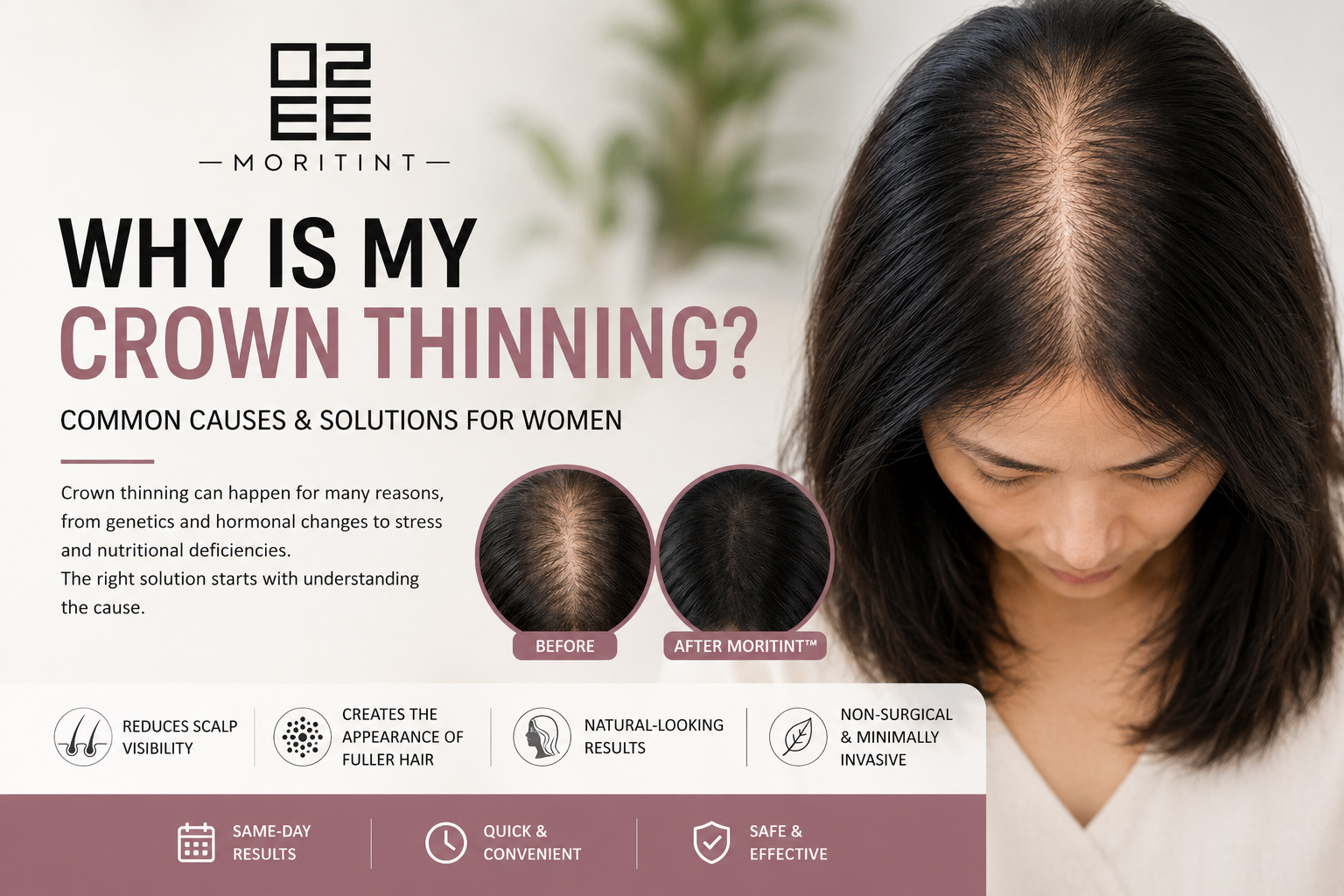
Crown thinning can be one of the most frustrating forms of hair loss because it is often difficult to see yourself until it becomes more noticeable. Many women first discover it in photos, under bright lights, or when styling their hair and noticing more scalp showing through at the top or back of the head.
The crown area, also known as the vertex, is the upper back portion of the scalp. When hair density decreases in this area, the scalp may become more visible, hair may appear flatter, and hairstyles may not hold volume the way they once did.
If you are wondering, “Why is my crown thinning?” there are several possible causes. Some are temporary, while others may be progressive. Understanding the reason behind crown thinning is important because the right solution depends on the underlying cause.
For women experiencing overall hair thinning, you can also learn more on our page about female hair loss causes and solutions.
Table of Contents
Crown thinning usually does not happen overnight. It often develops gradually over months or years. At first, the change may be subtle. You may notice that the hair at the top or back of your scalp looks less dense, especially when your hair is parted, wet, oily, or exposed to bright lighting.
Common signs include:
More visible scalp at the crown
Reduced volume at the top of the head
A flatter-looking hairstyle
Difficulty covering the crown area
Scalp showing in photos taken from above
Hair appearing thinner even though the hairline may still look normal
Unlike patchy hair loss, crown thinning usually appears as a gradual reduction in density rather than a clearly defined bald spot.
Yes, crown thinning is common in women, especially with age, hormonal changes, genetics, stress, or underlying health conditions. While many people associate crown thinning with men, women can also experience reduced density in this area.
In women, the pattern is often more diffuse. Instead of developing a completely bald crown, many women notice that the scalp becomes more visible through existing hair.
This is why crown thinning can be emotionally difficult. The hair is still there, but there is not enough density to fully conceal the scalp.
One of the most common reasons for crown thinning is female pattern hair loss. This is a genetic condition that causes hair follicles to gradually shrink over time. As the follicles become smaller, they produce finer and shorter hairs.
Female pattern hair loss often affects the top of the scalp, crown, and part line. The frontal hairline may remain mostly intact, but the density behind it gradually decreases.
Signs may include:
A wider-looking part
Thinning around the crown
Reduced density across the top of the scalp
More visible scalp under lighting
Gradual progression over several years
This type of hair loss is usually progressive, meaning it may continue if left unmanaged. Early evaluation is important because the sooner thinning is addressed, the more options may be available.
Hormones play an important role in the hair growth cycle. When hormone levels change, hair shedding or thinning may increase.
Common hormonal triggers include menopause, pregnancy, childbirth, thyroid imbalance, and other hormonal conditions. During menopause, lower estrogen levels may affect hair density and texture. Many women notice that their hair becomes finer, thinner, or less voluminous during this stage of life.
Hormonal changes do not always cause permanent hair loss, but they can trigger noticeable thinning at the crown or throughout the scalp.
Stress can also contribute to crown thinning. Significant emotional or physical stress may push more hairs into the shedding phase. This condition is often called telogen effluvium.
The confusing part is that shedding may not begin right away. It can appear several months after the stressful event. Examples include illness, surgery, emotional trauma, major life changes, rapid weight loss, or prolonged stress.
Stress-related shedding is often temporary, but it can make the crown look noticeably thinner while the hair cycle recovers.
Hair follicles require proper nutrition to function well. When the body lacks certain nutrients, hair growth may be affected.
Possible contributors include low iron, low vitamin D, inadequate protein intake, vitamin B12 deficiency, zinc deficiency, or restrictive dieting.
Nutritional hair loss often appears as diffuse thinning rather than one isolated bald spot. The crown may become more visible simply because overall density has decreased.
If thinning is sudden, significant, or accompanied by fatigue or other symptoms, it is wise to speak with a qualified healthcare provider.
Certain medical conditions may contribute to hair thinning. Thyroid disease is one of the more common examples. Both underactive and overactive thyroid conditions can affect the hair growth cycle.
Other possible contributors include autoimmune conditions, anemia, PCOS, chronic illness, or certain medications.
Because hair loss can sometimes be a sign of an underlying issue, women experiencing sudden or significant thinning should seek proper medical evaluation.
Crown thinning and hairline thinning are not always the same. Crown thinning affects the upper back portion of the scalp, while hairline thinning affects the front edge or temples.
Some women experience both, but others may only notice one area changing. If your concern is more related to the front hairline, you may find our page on hairline thinning causes and solutions helpful.
Understanding the pattern matters because different areas may require different treatment or cosmetic approaches.
Although this article focuses mainly on women, crown thinning is also very common in men. Male pattern hair loss often begins at the hairline, crown, or both.
For men, the crown may gradually expand into a larger thinning area over time. If you are researching this topic for a male client or family member, visit our page on men’s hair loss causes and solutions.
Many people notice crown thinning most under bright lights, bathroom mirrors, sunlight, or camera flash. This happens because the scalp reflects light differently than hair.
When hair density decreases, more light reaches the scalp. The contrast between dark hair and lighter scalp makes thinning more obvious.
This is especially common for women with dark hair and lighter skin. Even when there is still hair in the area, the contrast can make the crown appear thinner than it actually is.
Sometimes crown thinning can improve, but it depends on the cause.
Temporary shedding caused by stress, illness, childbirth, or nutritional deficiency may improve once the underlying trigger is addressed. However, genetic hair loss usually requires ongoing management and may not fully reverse on its own.
That is why proper diagnosis is important. Before choosing a solution, it helps to understand whether the thinning is temporary, progressive, hormonal, nutritional, or related to another medical condition.
Treatment depends on the underlying cause. Possible options may include medical evaluation, blood work, correcting deficiencies, topical treatments, prescription options, PRP, low-level laser therapy, or lifestyle changes.
Some women also use cosmetic solutions while waiting for medical treatments to work. These may include hair fibres, root sprays, toppers, styling changes, or scalp-based density treatments.
The best approach often combines proper medical evaluation with a cosmetic strategy that helps improve confidence right away.
MoriTint™ is a non-surgical cosmetic hair density enhancement treatment designed to reduce the appearance of visible scalp. It does not grow new hair. Instead, it helps create the look of fuller density by softly blending the scalp with the surrounding hair.
For crown thinning, MoriTint may be helpful when there is still existing hair in the area, but the scalp has become more visible due to reduced density.
By reducing the contrast between the scalp and hair, MoriTint can help the crown look fuller, softer, and more naturally blended.
You can learn more about this specific concern on our crown thinning solutions page.
Many people compare MoriTint with scalp micropigmentation, also known as SMP. While both treatments involve scalp pigmentation, they are not exactly the same.
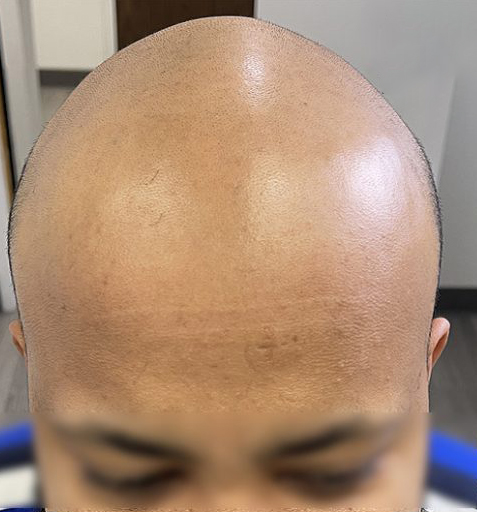
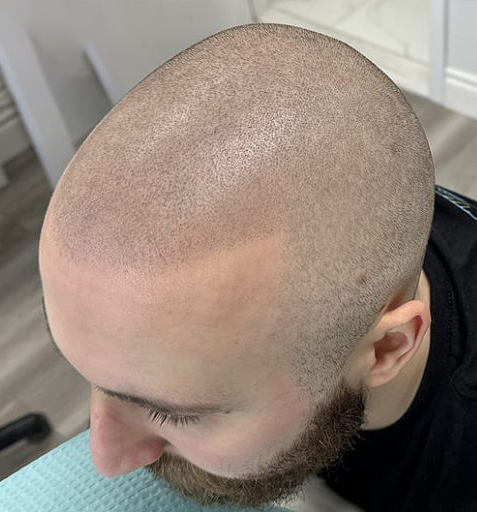
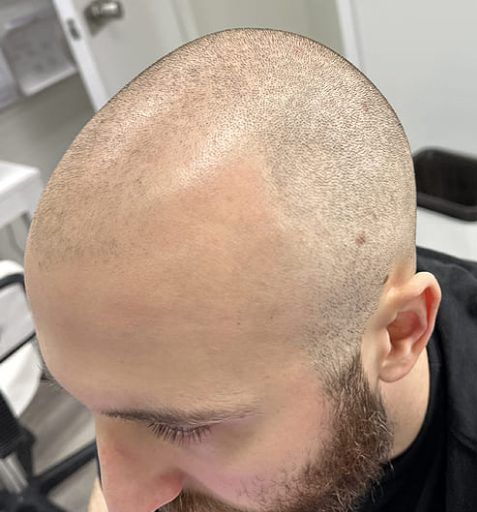
Traditional SMP is often associated with creating the look of shaved hair follicles, especially for men with short or shaved hairstyles. MoriTint is designed to create a softer density effect for thinning areas, especially where existing hair is still present.
For women with diffuse thinning or crown thinning, the goal is usually not to create a shaved-head look. The goal is to reduce scalp visibility and make existing hair appear denser.
You can read the full comparison here: MoriTint vs Scalp Micropigmentation.
A good candidate for MoriTint typically has some existing hair in the thinning area. The treatment works best when there is hair present, but the scalp is too visible because density has decreased.
You may be a candidate if:
Your crown looks thin under bright light
Your scalp shows through existing hair
Your hairline or part has become more visible
You want a non-surgical cosmetic option
You are not ready for a hair transplant
You want a natural-looking density effect
MoriTint may not be suitable for every type of hair loss. A consultation is important to determine whether your thinning pattern, hair colour, scalp condition, and goals are appropriate for treatment.
No. MoriTint is cosmetic. It does not treat the medical cause of hair loss, stop shedding, or regrow hair.
However, it can be used as a visual solution for suitable candidates who want the appearance of fuller hair. Some clients may choose MoriTint alongside other treatments recommended by a healthcare provider.
This makes it especially useful for women who are already addressing the cause of their hair loss but want a more immediate improvement in how their hair looks.
Crown thinning often progresses slowly. Because of this, many women wait until the thinning becomes more advanced before seeking help.
Early action can make a difference. If you understand the cause sooner, you may have more options to manage the condition. From a cosmetic perspective, treatments like MoriTint may also work better when there is still enough existing hair to blend with.
If you have recently noticed more scalp showing at the crown, it is better to investigate early rather than wait until the area becomes more difficult to camouflage.
Crown thinning can happen for many reasons, including genetics, hormones, stress, nutritional deficiencies, thyroid conditions, medical issues, or age-related changes. For many women, the first sign is not complete hair loss, but a gradual increase in scalp visibility at the top or back of the head.
The right solution depends on the cause. Some forms of crown thinning may improve with proper treatment, while others require ongoing management.
For women who want to improve the appearance of visible scalp, MoriTint™ may offer a non-surgical cosmetic option that helps create the look of fuller hair density.
To learn more about MoriTint and available solutions, visit MoriTint.ca.

HAIRTATTOO.CA is the No.1 Scalp Micropigmentation clinic in Toronto Canada, offering a revolutionary hair loss solution that has transformed the lives of countless Canadians.
© 2026 HAIRTATTOO.CA | Scalp Micropigmentation & Trichology Centre
